

Why, who, and how we help

Community = Health & Social Equality for All
Our mission is to eliminate barriers and create opportunities for people to have equal access to health & wellness and to live in our community with dignity.

How Blood Ties began
Blood Ties Four Directions Centre started as a grassroots initiative led by a group of community members who were concerned about HIV/AIDS in the late 1980s. The Skookum Jim Friendship Centre offered a space for community organizing.
The Yukon AIDS program operated out of the Friendship Centre until 1993 when it became incorporated as a charity, changed its name to AIDS Yukon Alliance, and moved to its own location. Throughout the 1990s, the organization started a care fund, hosted Yukon-wide conferences on HIV, started a needle exchange in Whitehorse, initiated pre- and post-test counselling services, began distributing condoms, and provided multi-media campaigns and education on HIV/AIDS and sexuality to Yukon community organizations and schools in Whitehorse and rural Yukon. This work expanded throughout the decade and the organization's reach and impact in the community continued to grow.
In 2001, the organization officially expanded its mandate to include Hepatitis C education and support. To reflect this evolving purpose, the organization decided to change its name. The organization has always been driven by the people who access services and developed a contest to choose a new organizational name and logo. There was a tie for first prize between “Blood Ties” and “Four Directions Centre” so the names were combined into “Blood Ties Four Directions Centre.”
In 2001, the Outreach Van was started as a multi-agency collaborative program run by Many Rivers, Fetal Alcohol Syndrome Society of Yukon, Kwanlin Dun First Nation, and Blood Ties.
In 2012, the first tiny house, Steve Cardiff, opened on an undeveloped, borrowed lot as a transitional housing program. Steve Cardiff was an MLA in the Yukon and a long-standing supporter of BT4D. The first tiny house was named in his honour.
In 2013, the board and staff created a vision for the Blood Ties community and areas of work and broadened the focus beyond HIV/AIDS and Hepatitis C to focus on the social factors that lead to health and social inequities.
Since then, the organization has continued to expand our services and reach:
Blood Ties has programs in four key strategic areas

Blood Ties embraces a number of critical philosophical underpinnings in how we approach our work. Those include:

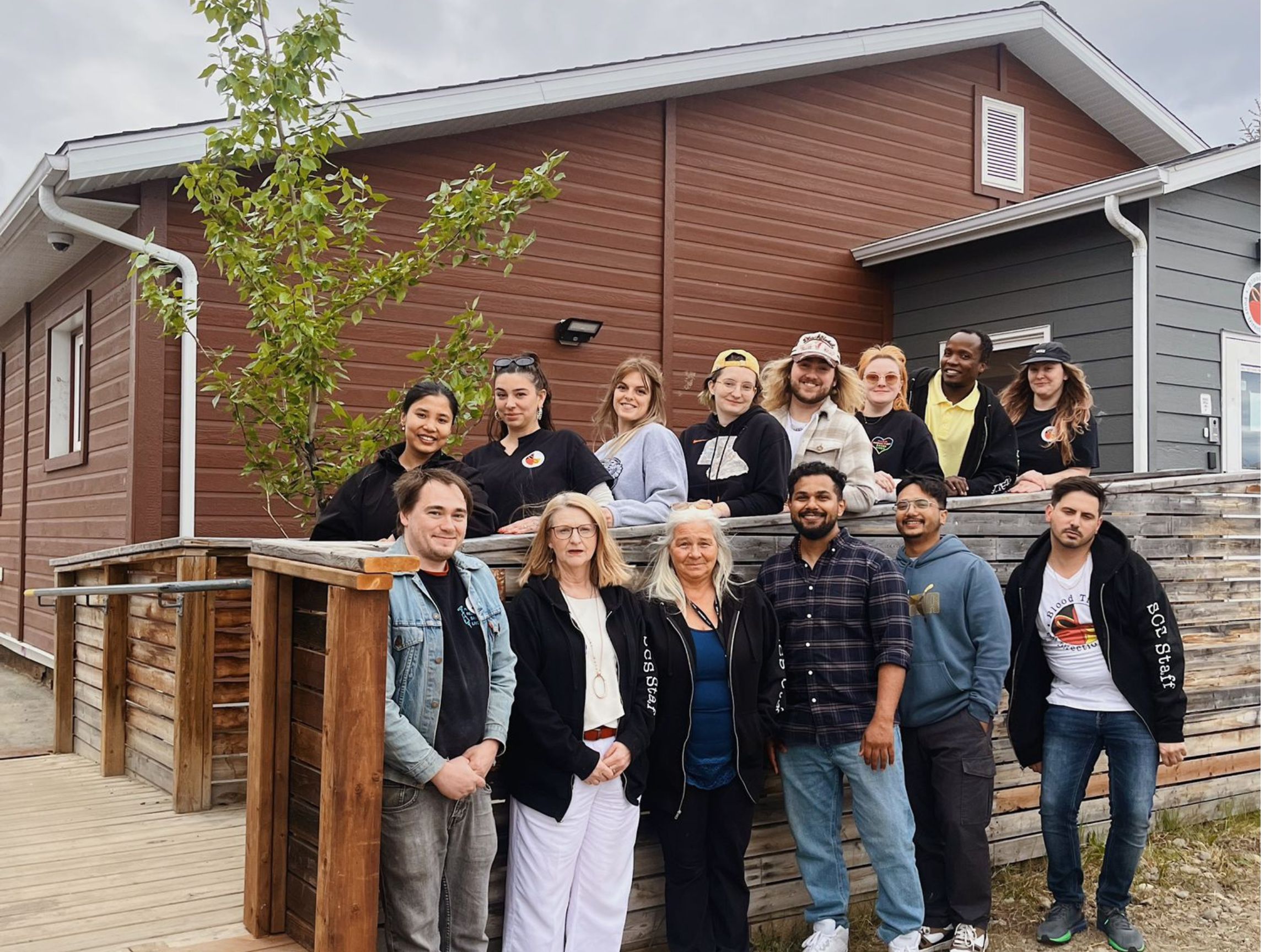
Blood Ties has various full-time, part-time, and casual staff members trained in harm reduction and committed to serving our clients. In partnership with Kwanlin Dün Health Centre and FASSY, the outreach van is staffed seven nights a week with local harm reduction workers.
Blood Ties is administered through a volunteer Board of Directors. This Board is responsible for governance of the organization, providing strategic leadership, oversight, and stewardship to ensure the organization is effective in working towards its mission, remains financially sustainable, and applies with applicable legislation.
Current Board Members: Dan Bader, Laura Beattie, Ashley Hope, and Patti Flather.
Blood Ties would like to thank all of its partners and sponsors for their support.


